

We are strategically positioned to benefit from the growing demand for large – diameter HSAW pipes, driven by investments in critical pipeline applications across industries (Source: CareEdge Report). Our product portfolio primarily comprises large diameter HSAW pipes with varied wall thickness. Further, we produce HSAW pipes with bevelled end finishes (angled edges to facilitate strong and uniform welded joints), with or without protective coatings. Our HSAW pipes are primarily manufactured and supplied in accordance with customer-specific technical requirements. These pipes are manufactured in steel grades that are in compliance with applicable Indian standards.
These grades represent varying levels of tensile strength and ductility, enabling the use of our pipes across a broad range of pressure bearing and structural applications. Our product portfolio primarily comprises large-diameter HSAW pipes ranging from 406 mm to 2,540 mm in diameter, with wall thickness varying between 5 mm and 20 mm. These HSAW pipes
We are strategically positioned to beenfit from the growing demand for large – diameter HSAW pipes, driven by investments in critical pipeline applications across industries. Our product portfolio primarily comprises large diameter HSAW pipes with varied wall thickness. Further, we produce HSAW pipes with bevelled end finishes (angled edges to facilitate strong and uniform welded joints), with or without protective coatings. Our HSAW pipes are primarily manufactured and supplied in accordance with customer-specific technical requirements. These pipes are manufactured in steel grades that are in compliance with applicable Indian standards. These grades represent varying levels of tensile strength and ductility, enabling the use of our pipes across a broad range of pressure bearing and structural applications. Our product portfolio primarily comprises large-diameter HSAW pipes ranging from 406 mm to 2,540 mm in diameter, with wall thickness varying between 5 mm and 20 mm. These HSAW pipes are manufactured in steel grades Fe 330 and Fe 410, in compliance with applicable Indian standards.

HSAW Bare Pipes are large-diameter steel pipes manufactured by forming steel coils into a spiral shape and welding the seams inside and out using a submerged arc process.

Epoxy coating is a specialized corrosion protection technique used to shield pipes from external environmental factors that can cause deterioration over time. This method involves applying a continuous layer of epoxy resin onto the surface of the pipe.


Polyurethane exterior coating is chosen for steel pipes primarily due to its excellent combination of properties that make it suitable for various applications, particularly those requiring protection against corrosion and environmental elements. These can be applied using various methods such as spraying, brushing, or dipping, making them versatile and relatively easy to apply to steel pipes of different sizes and shapes.

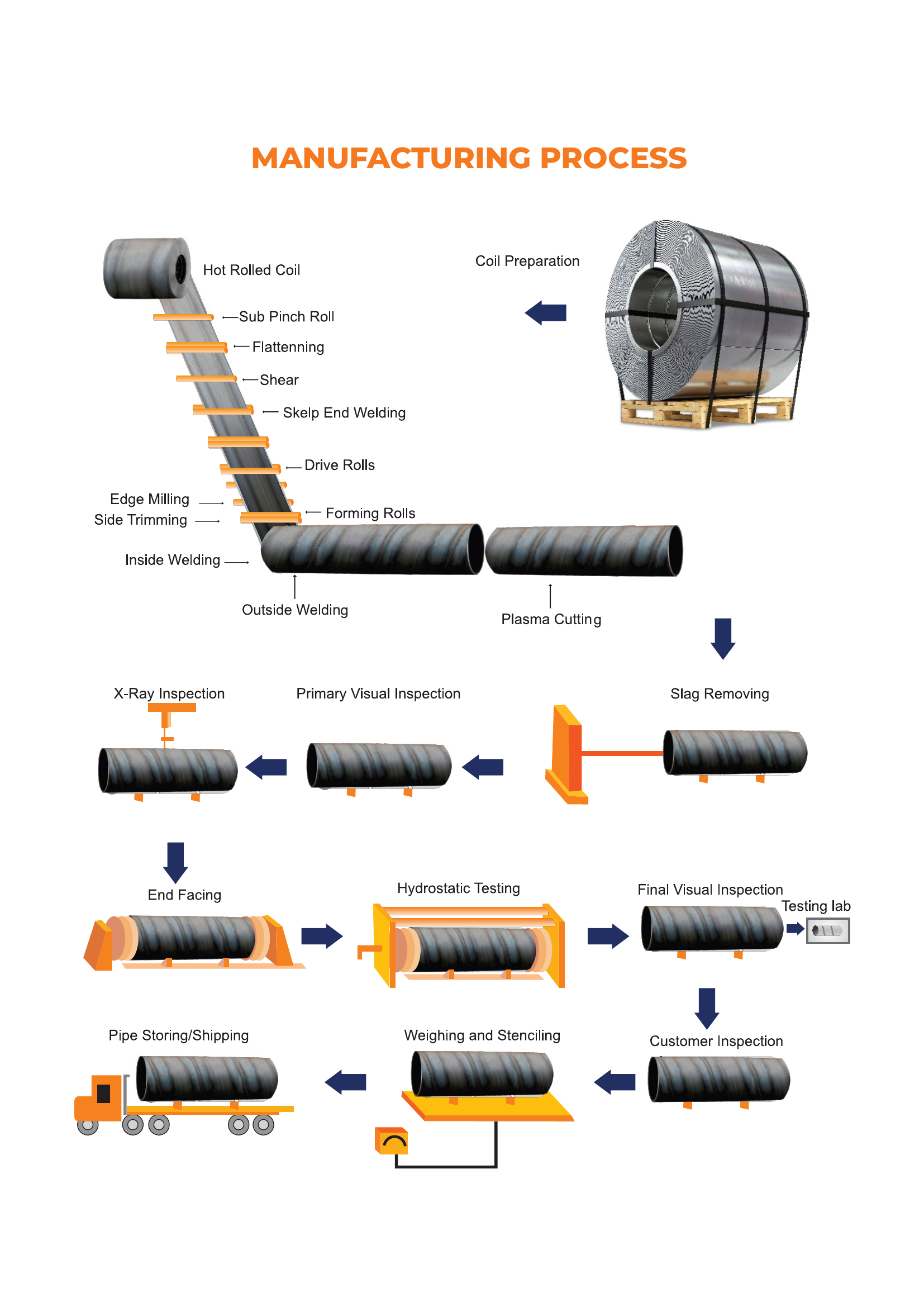

We believe that maintaining a quality of our products and adhering to customer specifications is critical for continued growth. We have a dedicated quality assurance team consisting of 11 personnel who ensure compliance with our quality management systems and statutory and regulatory compliances.
Our Manufacturing Facilities are accredited with ISO 9001:2015, ISO 14001:2015 and ISO 45001:2018 certifications, reflecting our adherence to internationally recognized standards relating to quality management, environmental management and occupational health and safety. The ISO 9001:2015 certification affirms that our quality management systems are designed to ensure consistency and quality across production processes. The ISO 14001:2015 certification reflects our commitment to responsible environmental practices. The ISO 45001:2018 certification underscores our focus on maintaining a safe and healthy workplace. We have adopted quality policies at our Sanand Facility and our Nagpur Facility, under which we are committed to supplying HSAW pipes of consistent quality in compliance with applicable standards, legal and regulatory requirements, and customer specifications.
Our quality policies also provide for continual improvement of our quality management systems, employee training, process control, customer satisfaction measures and periodic policy review to maintain quality standards across operations.


 info@hitechflow.in
 +91 11 45069006


